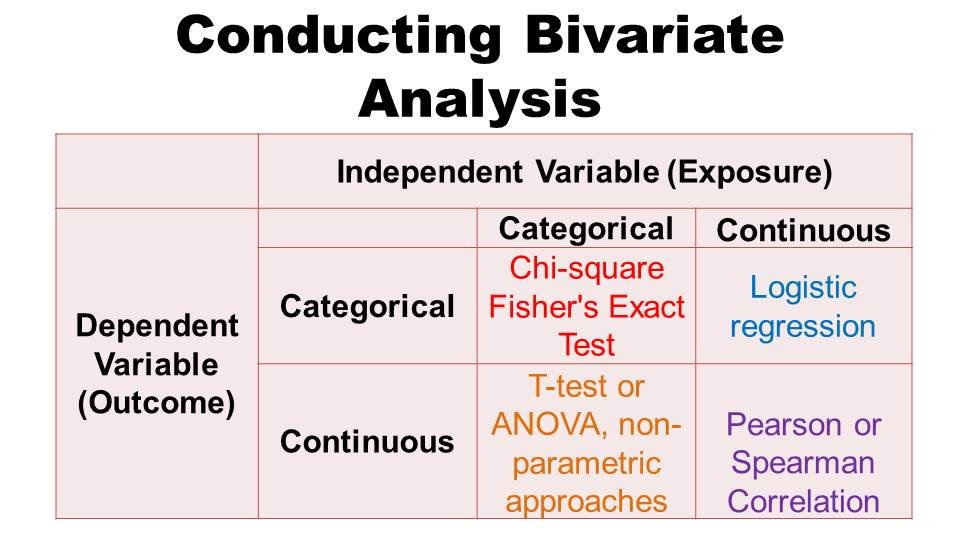
Introduction to Logistic Regression in Biostatistics and AI
In the rapidly evolving landscape of artificial intelligence and medical research, Logistic Regression Explained serves as a foundational pillar for binary classification. Despite its name, logistic regression is not a tool for predicting continuous values like height or weight; rather, it is a powerful statistical model used to determine the probability of an instance belonging to a specific category. In fields like biostatistics, this technique is indispensable for predicting patient outcomes, such as the likelihood of a disease being present or absent based on specific biomarkers.
As machine learning continues to integrate with traditional data science, logistic regression remains a preferred starting point for many developers. It offers a balance between computational efficiency and interpretability that complex neural networks often lack. Whether you are building a spam filter or a diagnostic tool for healthcare, understanding the mechanics of this linear model is essential for any practitioner aiming to harness the power of predictive analytics.
Theoretical Foundations: Behind the Sigmoid Function
The mathematical heart of logistic regression lies in the Sigmoid function, also known as the logistic function. Unlike linear regression, which produces a straight line that can extend to infinity, logistic regression must constrain its output between 0 and 1 to represent a probability. The Sigmoid function achieves this by transforming any real-valued input into an “S” shaped curve.
The standard formula for the logistic function is f(x) = 1 / (1 + e^-x). When the input (x) is very large and positive, the output approaches 1. When the input is very large and negative, the output approaches 0. This thresholding mechanism allows data scientists to map linear combinations of features to a probabilistic scale. If the output is greater than 0.5, the model typically classifies the input as “Class A”; otherwise, it falls into “Class B.” This mathematical simplicity provides the transparency required for high-stakes decisions in AI research.
The Logit Link Function
To understand the relationship between independent variables and the outcome, we use the “logit” function, which is the logarithm of the odds. The odds are defined as the probability of success divided by the probability of failure. By taking the natural log of these odds, we create a linear relationship with the predictor variables, allowing us to perform regression analysis on categorical outcomes.
Key Eligibility and Prerequisites for Implementation
Before implementing logistic regression in a professional or academic fellowship setting, certain data prerequisites must be met to ensure model validity. Not all datasets are suitable for this method, and ignoring these guidelines can lead to biased or incorrect conclusions.
- Binary Outcome: The dependent variable must be categorical and dichotomous (e.g., Yes/No, Success/Failure, 0/1).
- Independence of Observations: Data points should not be related to each other. For example, repeated measurements of the same individual over time might require a mixed-effects model instead.
- Linearity of Independent Variables: While the relationship between X and Y is not linear, there must be a linear relationship between the independent variables and the logit of the outcome.
- Absence of Multicollinearity: The predictor variables should not be highly correlated with one another. High correlation can make it difficult for the model to isolate the effect of each individual feature.
- Large Sample Size: Logistic regression typically requires a larger sample size than linear regression to achieve stable maximum likelihood estimates.
The Benefits of Using Logistic Regression in Data Science
When searching for “Logistic Regression Explained,” one quickly discovers its numerous advantages over more complex algorithms like Random Forests or Support Vector Machines. Its efficiency makes it a staple in both academic research and industry applications.
Interpretability: One of the greatest strengths of logistic regression is that the coefficients can be back-transformed into odds ratios. This allows researchers to say, “For every one-unit increase in X, the odds of the outcome occurring increase by Y percent.” This level of clarity is vital for regulatory approval in fields like medicine and finance.
Low Computational Cost: It is incredibly fast to train and requires very little memory. This makes it ideal for real-time applications or environments with limited hardware resources. Furthermore, it does not require the input features to be scaled as strictly as some other algorithms, though normalization is still recommended for gradient descent performance.
Technical Implementation: A Step-by-Step Guide with scikit-learn
Scikit-learn is the premier Python library for implementing linear models. It provides a robust framework for building, tuning, and deploying logistic regression models with just a few lines of code. To begin your implementation, you should ensure your environment is set up with NumPy, Pandas, and Scikit-learn.
To see the full documentation and advanced parameters for this model, Apply on the official page for detailed technical insights. Please confirm the deadline on the official page before applying these methods to time-sensitive research submissions or fellowship projects.
Step 1: Data Preparation
Clean your data by handling missing values and encoding categorical predictors into numerical formats using techniques like One-Hot Encoding. Split your dataset into training and testing sets to evaluate the model’s ability to generalize to unseen data.
Step 2: Model Initialization
Initialize the LogisticRegression class from the sklearn.linear_model module. You can specify parameters such as the solver (e.g., ‘liblinear’, ‘lbfgs’) and regularization strength (C).
Step 3: Training the Model
Fit the model to your training data using the .fit() method. During this phase, the algorithm uses Maximum Likelihood Estimation (MLE) to find the coefficients that maximize the probability of observing the given data points.
Model Evaluation: Accuracy, Precision, and AUC-ROC
Evaluating a logistic regression model requires more than just looking at accuracy. In many cases, especially with imbalanced datasets, accuracy can be misleading. Consider a medical test for a rare disease: if only 1% of patients have the disease, a model that predicts “Healthy” for everyone will be 99% accurate but completely useless.
- Precision and Recall: Precision measures the accuracy of positive predictions, while recall (sensitivity) measures the ability of the model to find all positive instances.
- F1-Score: The harmonic mean of precision and recall, providing a single metric that balances both concerns.
- AUC-ROC Curve: The Area Under the Receiver Operating Characteristic curve is a performance measurement for classification problems at various threshold settings. It tells us how much the model is capable of distinguishing between classes.
Best Practices and Deadline Guidance for Research Submissions
When presenting logistic regression results in a professional fellowship application or a peer-reviewed journal, follow these best practices to ensure your research stands up to scrutiny:
Feature Selection: Use techniques like Recursive Feature Elimination (RFE) or L1 Regularization (Lasso) to identify the most impactful variables. This reduces noise and prevents overfitting, where the model performs well on training data but fails on new data.
Report Confidence Intervals: Always include the 95% confidence intervals for your odds ratios. This provides a range of plausible values for the effect size, giving readers a better sense of the estimate’s precision.
Adhering to Deadlines: For those participating in data science competitions or academic fellowships centered on linear modeling, timing is everything. Review the technical requirements on the official page to ensure your implementation aligns with the latest library standards. Ensure you confirm the deadline on the official page before applying or submitting your final model documentation.
Conclusion: The Role of Linear Models in Modern AI
As we have explored in this Logistic Regression Explained guide, linear models remain the backbone of statistical inference and predictive modeling. While deep learning attracts much of the media attention, the majority of industrial and clinical decision-making relies on the reliability and transparency of logistic regression. Its ability to provide probabilistic outputs and interpretable weights makes it an evergreen tool in the data scientist’s arsenal.
By mastering the theoretical foundations, respecting the prerequisites for implementation, and utilizing robust libraries like scikit-learn, researchers can build models that are not only accurate but also ethically sound and easy to explain to stakeholders. Whether you are entering a fellowship or starting a new project, let the simplicity and power of logistic regression guide your path toward data-driven insights.
📖 Related read: Click here to get more relevant information